Accurate information serves as the foundation for today’s businesses. Every day, businesses depend on accurate data to make decisions about everything from customer records to accounting transactions through analytics and reports. If there is an error in how that data is entered, it could lead to serious repercussions for a business; such as losing money, poor decision-making, compliance issues, and less productivity. The importance of avoiding common errors in the processing of data will become even more important as companies continue their journeys towards completing a digital transformation. As of 2026, businesses that utilize reliable data entry services and follow common data entry practices will hold a tremendous advantage over their competition, and the gap will widen.
Below are some of the most frequent pitfalls that organizations fail to recognize, as well as some examples of how to help avoid making these common mistakes when entering data into your company’s database.
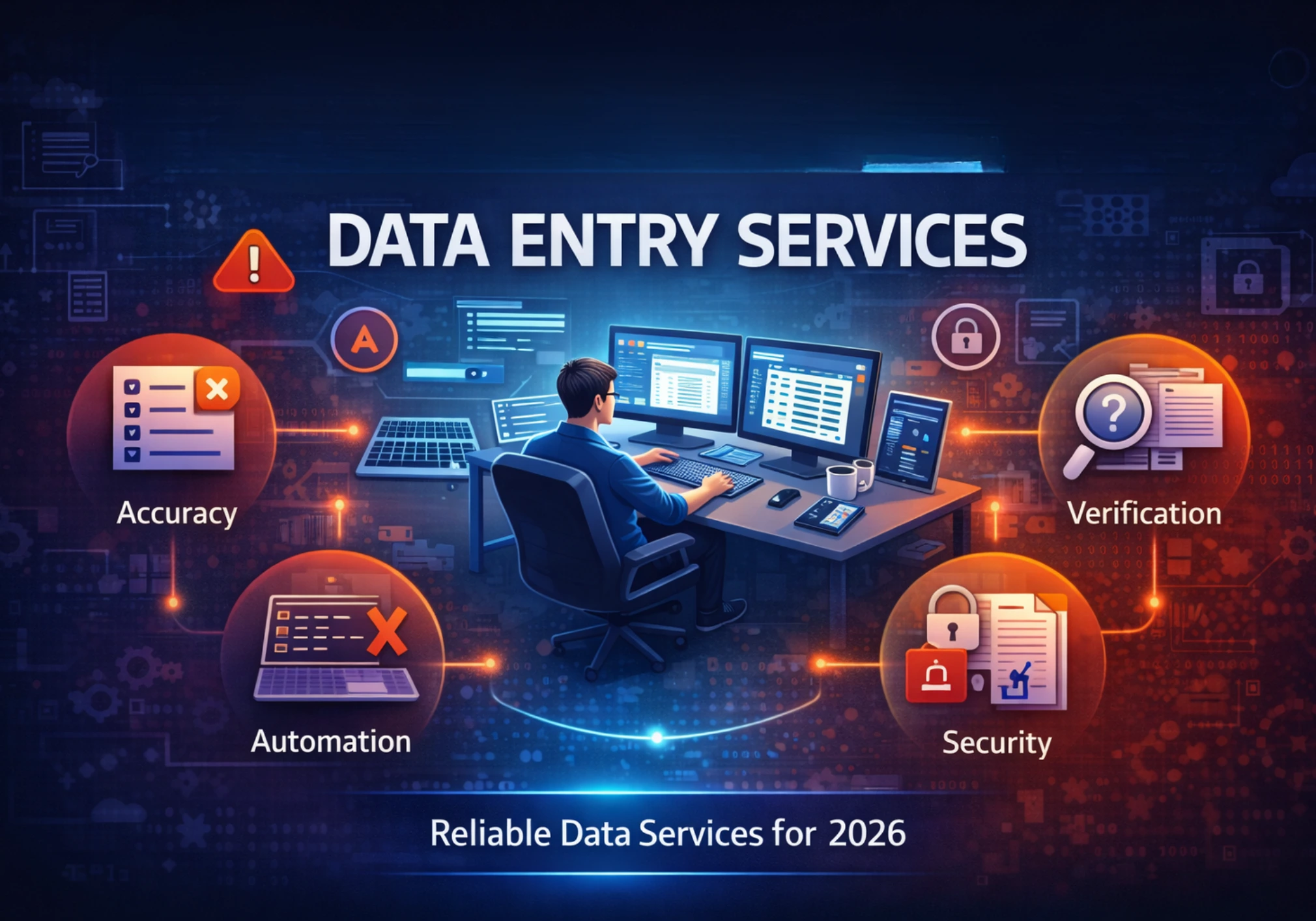
1. Failing to Establish Standards for Data Accuracy
An organization’s failure to establish standards for data accuracy is one of the largest causes of data entry errors. When there is no established guidelines for formatting data, validating data, or entering data, there will be inconsistencies in data across the organization. For example, if two or more individuals enter the same name, the data could become inconsistent or produce duplicate records.
To eliminate these types of errors, organizations should develop and use common guidelines for entering data into databases and should also implement validation rules. Many professional data services utilize both automated validation checks and established data entry-related standard operating procedures to ensure that there are no inconsistencies or errors.
2. Manual data entry without automation.
When lots of data needs to be entered manually by a human, chances for errors arising from mistakes in entering data will increase. For example, humans can miss typing entirely, such as when they enter a field or enter the wrong choice when classifying the entered information.
Automation is no longer an option come 2026. Advanced technologies like OCR (optical character recognition), AI-assisted data entry, and autocomplete will greatly reduce common data entry errors and increase business efficiency and productivity. By using an advanced data service, the users can take advantage of automated workflows that greatly reduce the amount of time needed to process transactions and minimize the risks associated with manual processes.
3. Weak processes for verifying data.
Verifying an entry after it has been entered is equally as important to entering an entry when working with information. Many businesses do not review information after entering it, resulting in the potential for small data entry errors to turn into larger issues for an organization.
A strong verification process will include double-checking entries, running validation checks on entered data, and conducting routine audits. Reliable data services offer quality assurance processes to catch and correct errors before they create more significant impacts on the organization.
4. Not Enough Employee Training
Poorly trained employees can cause a system to fail, regardless of the quality of that system. Often, inconsistent entry methods, confusion about how to enter and read data, and a lack of attention to detail arise because of inadequate training.
Businesses need to offer regular training classes for staff members to help them learn how to handle data properly, how to use software tools, and how to keep data accurate. Expertly trained teams supported by professional entry data services can maintain a high level of quality in data management.
5. Not Protecting the Data
When you enter data into a database, the goal is to be accurate, but also to keep private data secured. Inattention to security within the organisation will leave the organisation vulnerable to having its private data accessed by someone else or compromised in some way.
All organisations need to have access controls, encrypted storage and methods of storage that can secure data against all possible threats. Additionally, reputable data services can ensure a safe flow of data and compliance with data privacy laws.
6. Failing to Regularly Update or Clean Data
The reliability of data is reduced by out-of-date or duplicate records and can negatively impact decision making. Regularly scheduled data cleaning is frequently neglected by many organizations, resulting in cluttered databases and inaccurate report results.
Maintaining a database through routine data maintenance to remove duplicates, update existing records and archive old records ensures an orderly and usable database.
Conclusion
Due to the increasing amount of data-driven organizations in operations in 2026, it is necessary for companies to steer clear from common data entry pitfalls if they wish to be operationally successful. Data entry pitfalls that could prevent a company’s success include: poor accuracy, no automated processes, weak data verification methods, inadequate data entry training, and lack of data security. If an organization uses structured processes for their data collection and to use a professional data service, they will have an organized, secure, and trustworthy database. By investing in proper data management today, an organization can make better decisions, operate more efficiently, and expand their business over the long haul.