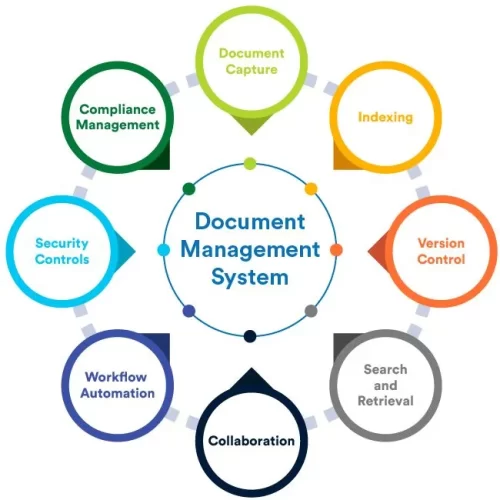
Data management is crucial for organizations because, in today’s digital environment, organizations encounter huge quantities of data every day of the week. Data can encompass customer information, financial data, inventory records, etc., and efficient data management is key in every organization. It is in such situations that database indexing plays a crucial role, especially for organizations that heavily depend on Data Entry Services.

What Is Indexing in Database Systems?
Indexing is a term associated with a book’s index. Instead of going through each book to locate a topic of interest, the index provides a quicker alternative to do the same job. Similarly, the term “index” has a completely new meaning when discussed with relation to the database system; in such a system, an index is a tool which helps locate a record quickly.
For businesses that provide data entry services where data is constantly being updated and retrieved in large quantities, the benefits of using indexing can be significant.
Why Indexing Is Important
1. Faster Data Retrieval
The biggest advantage of using an index is speed. Normally, without an index, accessing data within a database involves scanning the full table of data, which takes considerable time and time-consuming processing. The use of an index enables an immediate search for data.
In Data entry services, fast accessibility of stored records will facilitate productivity and prompt turnaround of service to clients.
2. Improved Database Performance
Indexing greatly improves the performance of the database. For example, queries such as SELECT statements, JOIN statements, and WHERE statements can all be performed more quickly.
For businesses dealing with large volumes of Data Entry Services, performance optimization translates into efficient running even when the database records rise into the millions.
3. Efficient handling of large data volumes
In turn, as data increases, the performance of a database can suffer if the indexing method is not implemented properly. Indexes are helpful in managing greater data through structured organization.
Organizations offering data entry services may operate with large-scale data for various clients, and indexing becomes very important.
4. Better User Experience
A fast-loading system and application provide a good user experience. For a team of people using the records within the organization or customers wanting reports from the records, indexing ensures that there are no delays.
A properly indexed database will ensure a seamless work flow for Data entry services, thus increasing the level of satisfaction with the clients.
5. Optimized Search Operations
Indexing helps make search operations more accurate and efficient. Sophisticated search queries can be carried out in databases with an index.
Similarly, for Data entry services, where daily work involves searching, filtering, and validating the data, optimized search functionality can prove to be useful.
6. Supports Data Integrity and Accuracy
Indexes can also ensure that there is data consistency within the data set through constraints such as primary keys or unique keys. Therefore, duplicate or incorrect information is eliminated.
Data Entry Services: In professional data entry services, accurate data and absence of errors are vital in decision-making.
7. Cost and Resource Efficiency
Such efficient indexing will reduce the server usage and ultimately running time, which will bring down the cost of infrastructure. Database usage can be minimized if query efficiency is better optimized.
In other words, for large-scale Data entry services companies, it means better cost management and operational efficiency.
Indexing and Data Entry Services: A Strong Connection
The process of providing data entry means constant insertion, updation, and retrieval of data. Unless proper indexing is done:
- Data retrieval becomes slow
- Reports take longer to generate
- System performance degrades
With the right indexing strategy:
- Data is accessed instantly
- Errors are reduced
- Productivity increases
This, in turn, makes indexing an essential component of any data-based data entry services business.
Best Practices for Database Indexing
- Use indexes on frequently searched columns
- Avoid over-indexing because it may hinder speed in insertion operations.
- Regularly monitor indexes and optimize them.
- Select the appropriate type of indexing – B-tree, HASH, Clustered, Non-clustered
Conclusion
Indexing is not just a technical feature it is a necessity for modern database systems. It improves speed, performance, accuracy, and scalability, all of which are essential for businesses managing large volumes of data. For organizations delivering professional Data entry services, effective indexing ensures smooth operations, reliable data handling, and long-term efficiency.