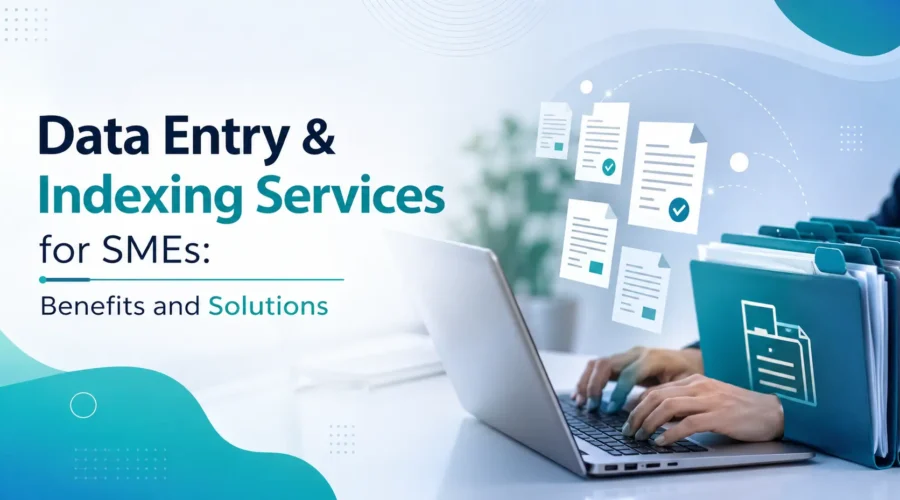

In today’s fast-paced business environment, data is one of the most valuable assets an organization can have. Whether it’s customer information, financial records, or inventory details, managing data efficiently is crucial. Traditionally, data entry and indexing were labor-intensive processes, prone to human error and time delays. However, with technological advancements, the landscape of data management is undergoing a remarkable transformation.
The Traditional Challenges of Data Entry & Indexing
Manual data entry and indexing have long been associated with several challenges:
-
High Error Rates: Even skilled personnel can make mistakes when entering large volumes of data.
-
Time-Consuming: Manual processing of documents and records consumes significant time and resources.
-
Limited Accessibility: Physical files are difficult to search, retrieve, and share efficiently.
-
Storage Issues: Maintaining paper records requires significant physical space and resources.
These challenges often slow down business processes, affect decision-making, and increase operational costs.
Technological Advancements Transforming Data Entry & Indexing
Modern technology has revolutionized the way businesses handle data. Here are some key developments:
1. Automation and AI-Powered Solutions
Automation tools and Artificial Intelligence (AI) are now capable of performing repetitive tasks such as data entry with remarkable accuracy. AI-powered systems can:
-
Extract information from documents automatically
-
Recognize patterns and categorize data efficiently
-
Reduce human error and increase productivity
2. Optical Character Recognition (OCR)
OCR technology converts scanned documents, PDFs, and images into editable and searchable digital formats. This allows businesses to index large volumes of data quickly and efficiently, eliminating the need for manual typing.
3. Cloud-Based Data Management
Cloud technology enables secure storage, easy retrieval, and real-time access to data from anywhere. With cloud-based indexing systems, organizations can:
-
Access data remotely
-
Collaborate seamlessly across teams
-
Reduce dependency on physical storage
4. Integration with Other Business Tools
Modern data entry and indexing software can integrate with CRM systems, accounting software, and analytics platforms. This integration ensures that data flows seamlessly across the organization, enabling better decision-making and operational efficiency.
5. Enhanced Security Measures
With technology, sensitive data can be encrypted and access-controlled, ensuring that only authorized personnel can access it. This reduces the risk of data breaches and enhances compliance with regulatory standards.
Benefits of Technology-Driven Data Entry & Indexing
Businesses leveraging modern technology for data management can enjoy numerous benefits:
-
Increased Accuracy: Automated systems minimize human errors.
-
Time Efficiency: Faster processing and retrieval of data saves valuable time.
-
Cost Savings: Reduced labor and paper costs improve operational efficiency.
-
Better Decision Making: Real-time access to organized data helps in informed decision-making.
-
Scalability: Businesses can manage large volumes of data without additional resources.
Conclusion
The fusion of technology with data entry and indexing has transformed a once tedious process into a streamlined, efficient, and highly accurate operation. Organizations that embrace these advancements can not only save time and costs but also gain a competitive edge by leveraging their data effectively.
Investing in modern data entry and indexing solutions is no longer optional it is essential for any business aiming to stay ahead in today’s data-driven world.