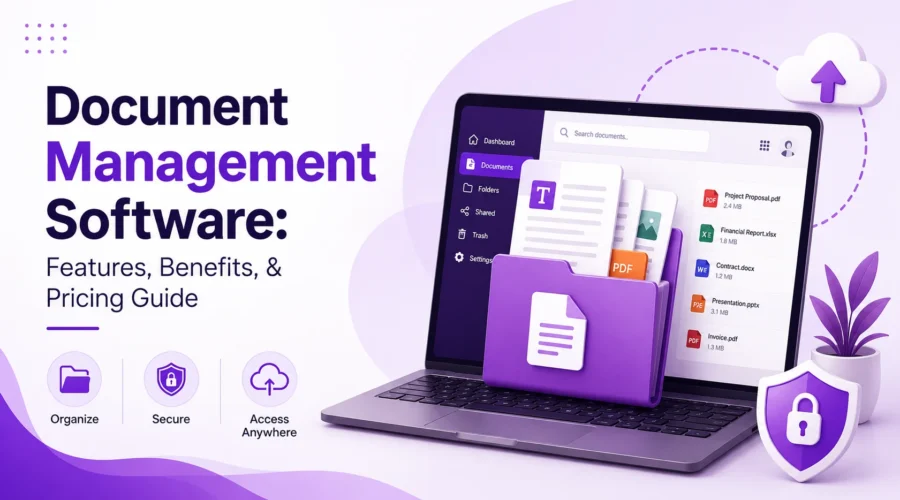
In today’s business environment, which is very much regulated, compliance isn’t a choice anymore – it is quite a necessity. Besides, organisations must adhere to very tight rules on how they store data, secure it, respect privacy, and handle documents and when and how they handle documents. The price of non-compliance would be heavy fines, court cases, and loss of good reputation. This is when DMS software becomes very helpful.
What is Compliance in Document Management?
Compliance means following the rules, regulations, and standards of the industry that control the way documents and data are handled. Part of this is keeping precise records, protecting data, and being capable of quickly finding documents if an auditor or legal representative needs them.
1. Centralized document storage
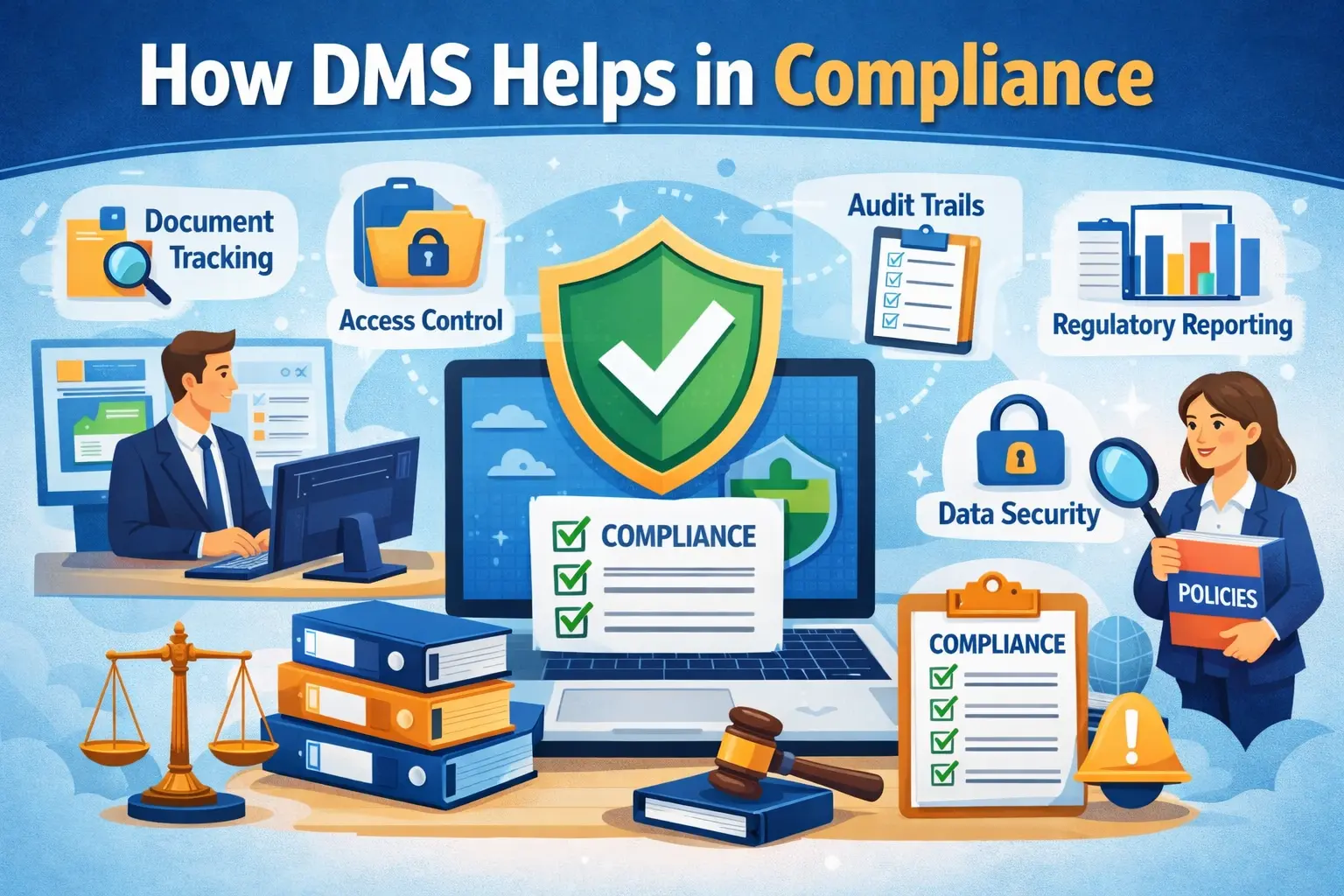
DMS keeps all your documents in one secure, centralised place. This means fewer chances of losing files and makes it straightforward to locate any document when you need it for an audit or inspection.
2. Improved Data Security
Security is vital for compliance. DMS systems offer such security features as password protection, encryption, and role-based access control, among others. Therefore, only authorised personnel can get to sensitive data, which assists companies in meeting data protection standards.
3. Audit Trails and Tracking
A digital document storage keeps detailed audit trails. It logs who viewed, changed, or shared a document, as well as the time it happened. Such openness is crucial for proving compliance at audits.
4. Version Control
Dealing with different versions of documents can be complicated. A Document Management System (DMS) keeps track of all the edits and keeps the different versions. So, workers will always be using the most recent version, but the older ones will be kept for compliance purposes.
5. Automated Retention Policies
Many regulations require businesses to keep their records for certain amounts of time. A DMS (Document Management System) The Automated Retention Policy Function allows you to maintain your documents in an automated way according to the regulatory schedule; when you need to remove them, they will be removed automatically.
6. Easy Document Retrieval
When a business is subject to a document audit or legal audit, the ability to get documents back in a matter of minutes can be very important. The DMS supporting searching and retrieval by keywords, tags or metadata makes retrieving records much easier and saves time and effort.
7. Regulatory Compliance Support
Various Industries Are Subject To Various Regulatory Compliance Standards (e.g., GDPR, HIPAA, ISO, etc.). A DMS assists companies in aligning with these industry regulations by structuring your documents and securing your documents.
8. Reduced Human Errors
Handling documents manually is prone to mistakes such as misfiling or duplication. When a DMS is automated, it largely reduces these risks, making document management more accurate and reliable.
Benefits of Using Document Management Software for Compliance
-
Reduces risk of non-compliance penalties
-
Enhances data security and confidentiality
-
Simplifies audit processes
-
Improves operational efficiency
-
Ensures proper document lifecycle management
Conclusion
Document management software can be an essential partner of a business for it to keep up with the ever-changing compliance landscape. It offers a number of features such as secure storage, audit trails, automated retention and easy retrieval that, in fact, make any organisation ready at all times for audits and legal requirements.
Those who want to make their compliance processes seamless and, at the same time, gain better control over their documents, buying a dependable document management software package would be not only a wise decision but a must-have one as well.