Today businesses have hundreds of documents that they create, modify and share. This can be everything from business reports, contracts, invoices, projects, presentations and client details. If many people are working on the same document, having control over document versions will become crucial. Without this you could run into problems such as confusion, duplication, out-of-date information and loss of data.
A document version control system allows businesses to manage their document versions effectively. This helps track changes made, know which document is up-to-date and also gives access to previous versions when needed. Whilst this may not appear to be a big part of managing documents it can play an important role. Ensuring your documents are accurate, increasing productivity and keeping your data safe.
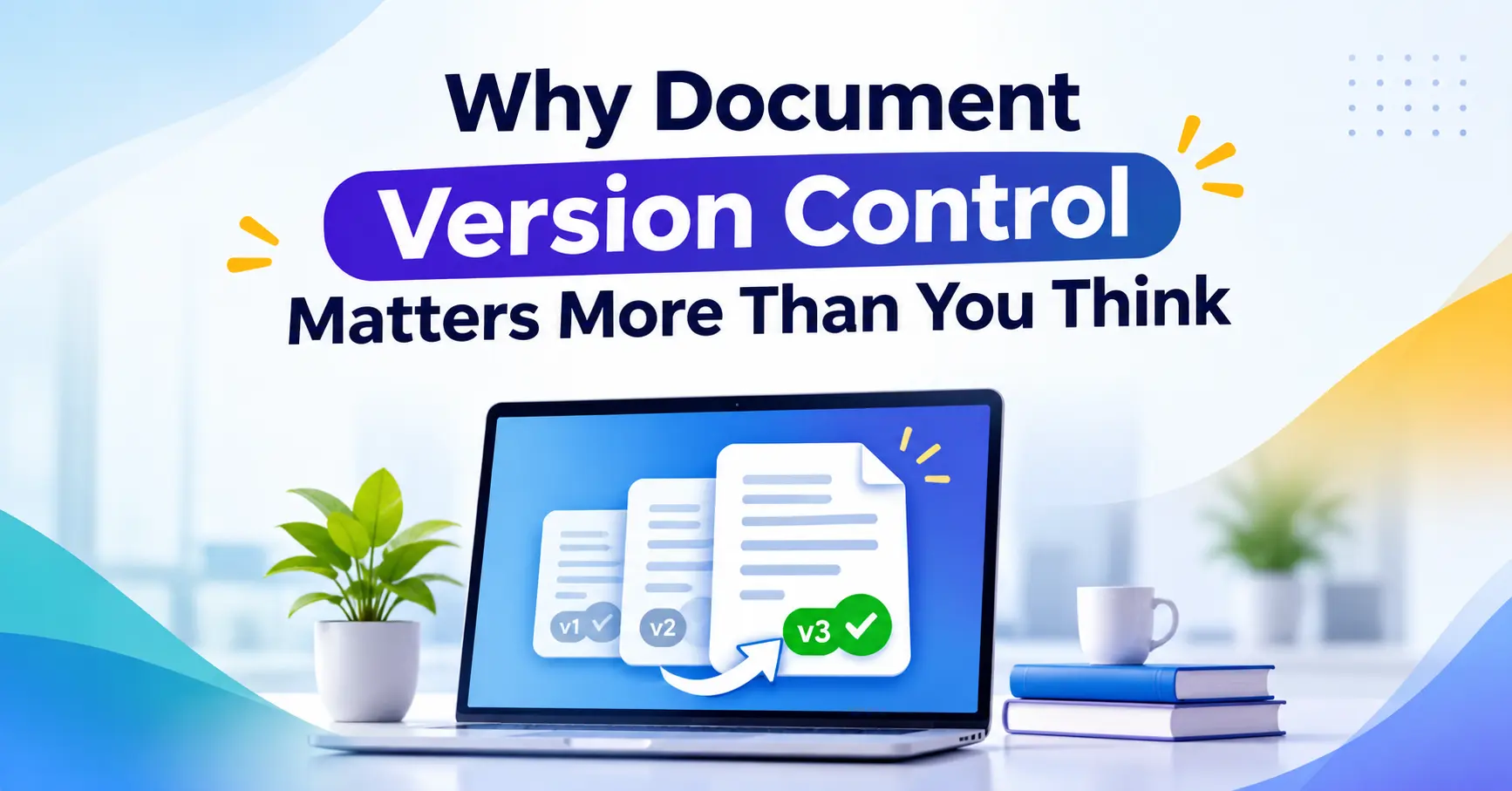
1. Avoids Confusion When Multiple Copies Exist
A common issue in the workplace can be that there are multiple copies of the same file. Employees may have saved different versions of a document with names like Final, Final Updated and Final Latest making it hard to determine which version is which.
Version control keeps your documents well organized and means you can easily distinguish what the latest approved version is.
2. Increases Collaboration
It can be difficult to manage when more than one employee is editing a document. Without good version control you may miss important changes.
Using document version control means you know exactly who has made changes to your document and when. This makes collaboration much easier.
3. Retrieve Previous Versions
Sometimes mistakes can happen and information can be changed or deleted by accident. An employee could accidentally delete important information.
Having version history means that you can retrieve older versions of your document. This will help reduce any unnecessary work and will help avoid losing important business information.
4. Increases Accuracy & Accountability
Documents in a business often hold important information relating to customers, finances, operations and compliance. Using incorrect/out of date information can cause issues.
Version control helps keep your documents accurate and shows a clear version history. This will improve accountability as you can see who updated the document and when.
5. Compliance & Security
Many businesses will need to ensure they have good records to comply with internal audits, legal requirements and industry regulations. Document version control helps to provide a reliable version history.
Along with using permissions and auditing, it will help you to control who has access, can edit and approve your key documents.
6. Saves time and increases productivity
Searching for the right version of documents can waste lots of working time. Employees may also have to spend extra time to compare documents or fix errors due to out of date information.
With a well structured version control system, less time will be wasted looking for documents. Employees can concentrate on what they should be doing as less time will be spent trying to sort out duplicates.
Frequently Asked Questions
1. What is document version control?
Document version control allows you to keep track of changes made to documents including tracking different versions.
2. Why is document version control important for businesses?
This can help avoid having duplicate files, reduce data loss, improve collaboration, ensure accuracy and organise your important documents.
3. How does document version control improve collaboration?
Employees can see what changes have been made, know which documents have been updated and manage their information correctly.
4. Can document version control help me recover information?
Yes, if your system keeps track of previous versions you will be able to recover the previous version and get back your information.
5. What is the difference between document version control and document management?
Document version control will allow you to keep track of changes made to documents whereas document management will allow you to manage your entire process of storing, organizing, accessing and sharing your business documents.
6. Does a Document Management System allow for version control?
Yes, many Document Management Systems allow you to manage your versions through version history, permissions, audit trails and document tracking to help you manage your files efficiently.
Conclusion
Overall, using document version control can help businesses keep accurate information, increase collaboration, protect important information and can help reduce common issues when managing documents. In today’s world, organizations are dealing with larger amounts of digital information so it is essential to have a reliable version control system.
By using a solution such as a Document Management System (DMS) you can help manage your documents by tracking changes, controlling who can view them and keeping your digital information organized. By investing in good document management processes you can create an environment that is more efficient, secure and productive.